 Diba Energy Pegah Co.
Blade Mapping: Why a Few Grams Decide How Smoothly an Engine Runs
Published:
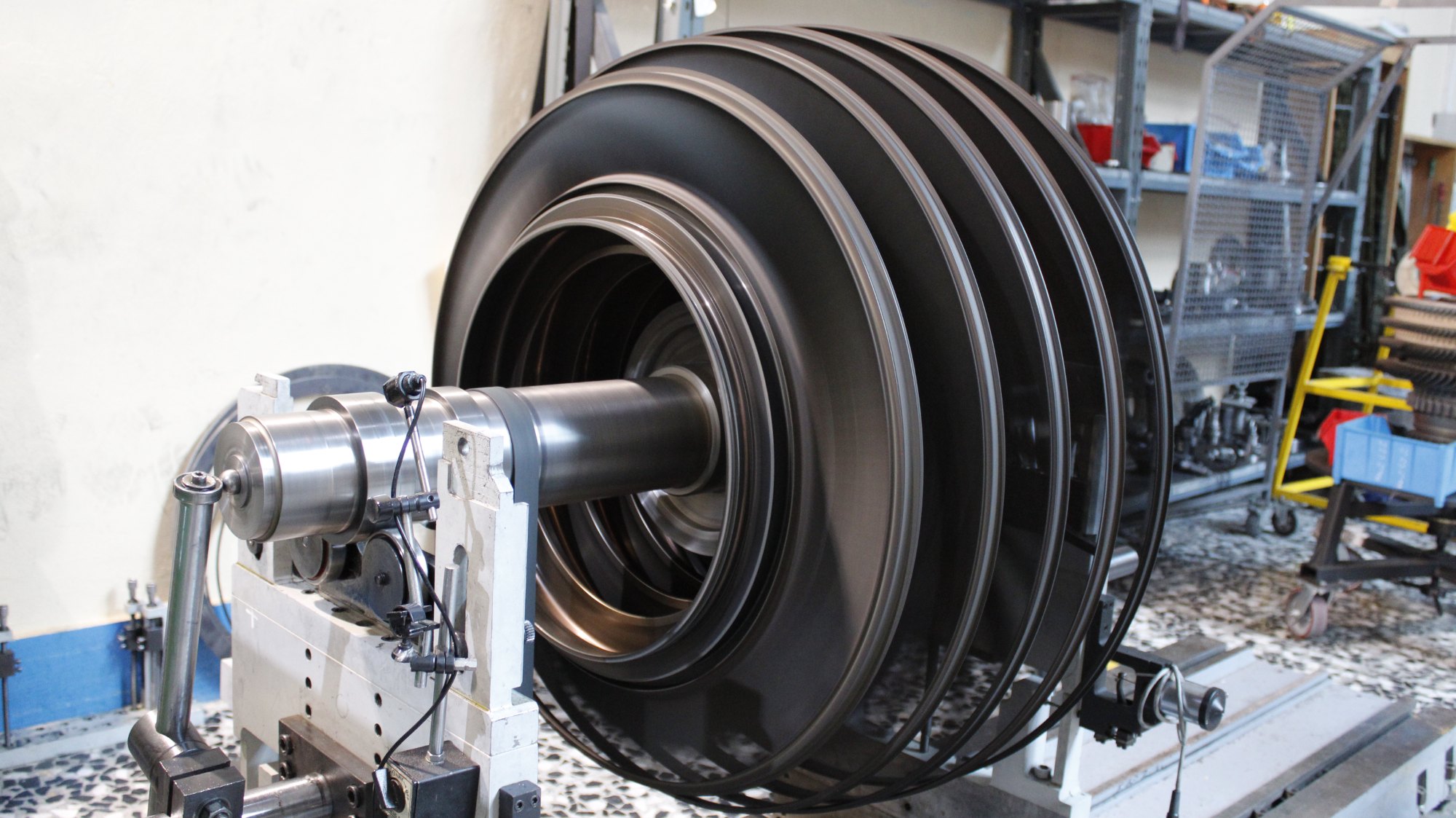
A turbine or compressor disk can carry dozens of blades, and no two of them are exactly alike. Manufacturing tolerances, repairs and wear leave each blade slightly heavier or lighter than its neighbours. At more than ten thousand revolutions per minute, those small differences add up to a real force pulling the rotor off-centre once every turn.
That force is unbalance, and it shows up as vibration. Vibration raises the load on bearings, speeds up fatigue in the rotor and its supports, and can trigger high-vibration readings in service. Keeping it low is one of the quiet details that decide how long an engine runs between shop visits.
What matters is not just a blade's weight but its moment weight: its mass multiplied by the distance of its centre of gravity from the rotor axis. A blade that is a little heavier near the tip pulls harder than one that is heavier near the root. So each blade is measured on a moment-weighing scale before assembly.
The next step is the blade map: deciding which blade goes in which slot. The aim is to place the blades so their moment weights cancel each other out around the disk, with heavier blades balanced by heavier blades on the opposite side. Even a modest set of blades can be arranged in more ways than anyone could try by hand, so the arrangement is calculated by software. Any remaining unbalance is then corrected on a balancing machine.
In Diba Energy's engine shop, blade mapping and balancing are done with software developed in-house, as part of our module disassembly and assembly work under CAA.IRI Part 145 approval.